
Driving Governance, Risk and Compliance Excellence with SAP GRC
Share This Post
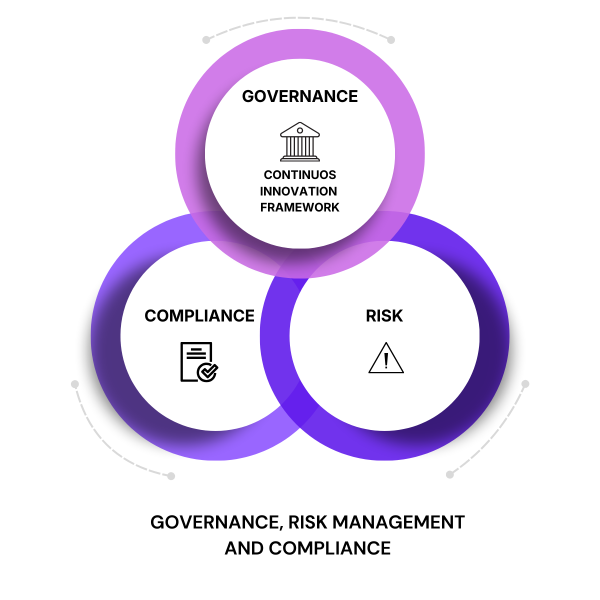
Governance in a Changing Regulatory Landscape
Organisations today operate in an environment where regulatory expectations, digital complexity, and operational scale continue to increase. As enterprise systems expand and business processes become more interconnected, managing Governance, Risk, and Compliance (GRC) effectively has become essential for maintaining operational integrity and regulatory confidence.
Governance frameworks are no longer limited to compliance reporting or periodic audits. Modern organisations require continuous visibility into risk exposure, stronger access governance, and consistent policy enforcement across enterprise systems.
At TechWit, we help organisations strengthen their governance foundations through SAP GRC implementation and advisory services. By combining strategic consulting with deep SAP expertise, we enable enterprises to integrate governance capabilities directly into their SAP environments and operational workflows. This approach helps organisations improve transparency, reduce risk exposure, and build governance frameworks that support long-term business resilience.
The Challenge of Fragmented Governance
Many organisations still manage governance processes through disconnected tools and manual oversight. Access risks are often tracked in spreadsheets, segregation-of-duties conflicts are identified only during periodic reviews, and audit evidence is gathered reactively when compliance assessments approach.
When governance operates outside core enterprise systems, visibility into risk becomes limited. Leadership teams often rely on delayed reports rather than real-time insights, making it difficult to respond quickly to emerging operational or compliance issues.
As organisations scale their digital operations and adopt platforms such as SAP S/4HANA, these fragmented governance models become increasingly difficult to sustain. A more integrated approach is required, one that embeds governance capabilities directly within enterprise systems and operational processes.
Strategic Advisory and GRC Readiness
Every successful governance transformation begins with a clear understanding of the organisation’s operating environment. Before implementing new governance technologies, it is essential to evaluate existing risk management practices, access governance structures, and regulatory obligations.
TechWit works closely with organisations to assess governance maturity and identify areas where operational processes, technology platforms, and compliance frameworks intersect. This assessment helps uncover segregation-of-duties risks, access management gaps, and governance challenges that may affect operational performance.
Based on these insights, a tailored SAP GRC framework and implementation roadmap is developed. The roadmap aligns governance initiatives with the organisation’s technology architecture, whether cloud-based, hybrid, or on-premise SAP environments. By establishing a clear strategic direction, organisations can strengthen governance capabilities while maintaining operational efficiency.
Implementing SAP GRC Across the Enterprise
Once a governance strategy is defined, the next step is implementing a connected SAP GRC framework across the enterprise landscape. SAP GRC provides a structured platform for managing access governance, risk monitoring, and compliance controls within enterprise systems.
Through SAP Access Control, organisations gain stronger oversight of user access and segregation-of-duties policies. SAP Risk Management enables structured monitoring of operational risks across financial and operational processes, while SAP Process Control supports internal compliance monitoring and ensures governance policies remain consistently enforced.
Integration is essential during this stage. SAP GRC must operate across the organisation’s broader technology ecosystem, connecting with SAP S/4HANA, human resource platforms, legacy SAP systems, and other enterprise applications. This ensures governance policies are applied consistently across the organisation’s operational landscape.
As governance processes become integrated, manual provisioning workflows are replaced with structured access management. Risk monitoring becomes proactive rather than reactive, and compliance activities become embedded within everyday operations.
Embedding Governance into the SAP Digital Core
For many enterprises, SAP S/4HANA serves as the digital core of business operations, supporting financial management, supply chain management, procurement processes, and operational analytics.
Embedding governance capabilities within this digital core enables organisations to manage risk and compliance more effectively. Through SAP Embedded GRC, governance controls operate directly within enterprise transactions and workflows.
Segregation-of-duties policies can be enforced during role creation and access provisioning, preventing conflicts before they occur. Risk indicators can also be linked directly to operational processes, providing leadership teams with real-time visibility into governance performance.
Compliance monitoring becomes continuous rather than periodic. Automated controls within SAP transactions ensure governance policies remain consistently enforced, reducing the effort required during audit preparation and strengthening overall compliance assurance.
A Real-World Governance Transformation
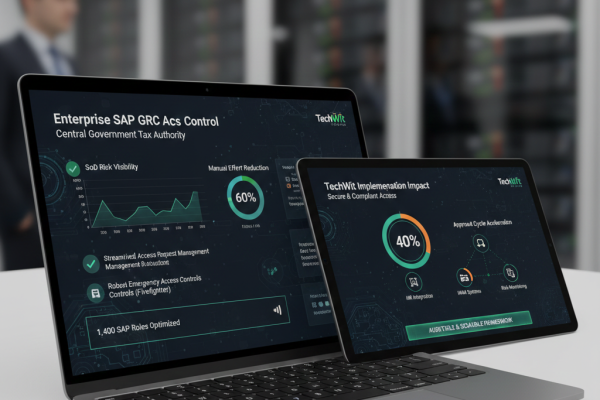
Enterprise SAP GRC Access Control Implementation for a Central Government Tax Authority
TechWit delivered an enterprise-wide SAP GRC Access Control implementation for a central government tax authority, transforming SAP access governance and strengthening regulatory compliance across its digital landscape.
The organisation was operating with manual access management processes, limited visibility into Segregation of Duties (SoD) risks, and significant effort during audit preparation. TechWit implemented automated Access Risk Analysis, streamlined Access Request Management workflows, and introduced robust Emergency Access (Firefighter) controls.
As part of the engagement, approximately 1,400 SAP roles were reviewed and optimised, and a structured SoD matrixwas developed. This framework was integrated with HR and IAM systems to enable secure joiner–mover–leaver automation and continuous access risk monitoring.
Results
- 60% reduction in manual access provisioning effort
- 40% faster access approval cycles
- Full visibility of Segregation of Duties risks across critical SAP functions
- Stronger audit readiness and regulatory compliance
The implementation established a secure, auditable, and scalable SAP access governance framework aligned with government regulatory standards. Access control moved from a reactive compliance activity to a strategic security capability embedded within the organisation’s SAP environment.
Before and After: The Impact of SAP GRC
The benefits of SAP GRC implementation become clear when organisations transition from fragmented compliance processes to integrated governance frameworks.
| Before | After | |
|---|---|---|
| Access Management | Manual access provisioning and spreadsheet tracking | Automated provisioning and role governance |
| Segregation of Duties | Conflicts discovered during audits | Preventive SoD checks embedded in role design |
| Risk Monitoring | Static reports with delayed visibility | Real-time risk insights across enterprise systems |
| Compliance Management | Compliance Management | Continuous compliance monitoring |
| Governance Visibility | Fragmented oversight across teams | Centralised governance dashboards |
Sustaining Governance Excellence
Governance frameworks must evolve as organisations grow and regulatory environments change. Effective GRC programmes require continuous monitoring, optimisation, and adaptation.
Through ongoing governance optimisation and support services, organisations can refine controls, update compliance frameworks, and improve risk visibility as business operations expand.
By treating governance as a continuous capability rather than a one-time implementation, organisations ensure that compliance frameworks remain effective and aligned with enterprise objectives.
Governance as a Strategic Capability
Strong governance is no longer simply about regulatory compliance. It enables organisations to operate with confidence, transparency, and resilience.
When governance is embedded in enterprise systems such as SAP S/4HANA, organisations can monitor risks in real time, enforce policies consistently, and maintain continuous compliance across their operations.
At TechWit Business Solutions, we help organisations build governance frameworks that integrate risk intelligence directly into their digital platforms, ensuring governance supports long-term enterprise growth and operational integrity. Governance delivers its greatest value when it operates inside the systems that power the business.

Learn More About Our SAP GRC Services
If your organisation is exploring how SAP GRC can strengthen governance, reduce risk exposure, and improve compliance across enterprise systems, discover how TechWit delivers SAP GRC implementation and advisory services for modern enterprises.
Start Your SAP GRC Journey
Strong governance begins with the right framework. TechWit helps organisations implement SAP GRC solutions that improve risk visibility, strengthen access control, and enable continuous compliance across SAP environments.